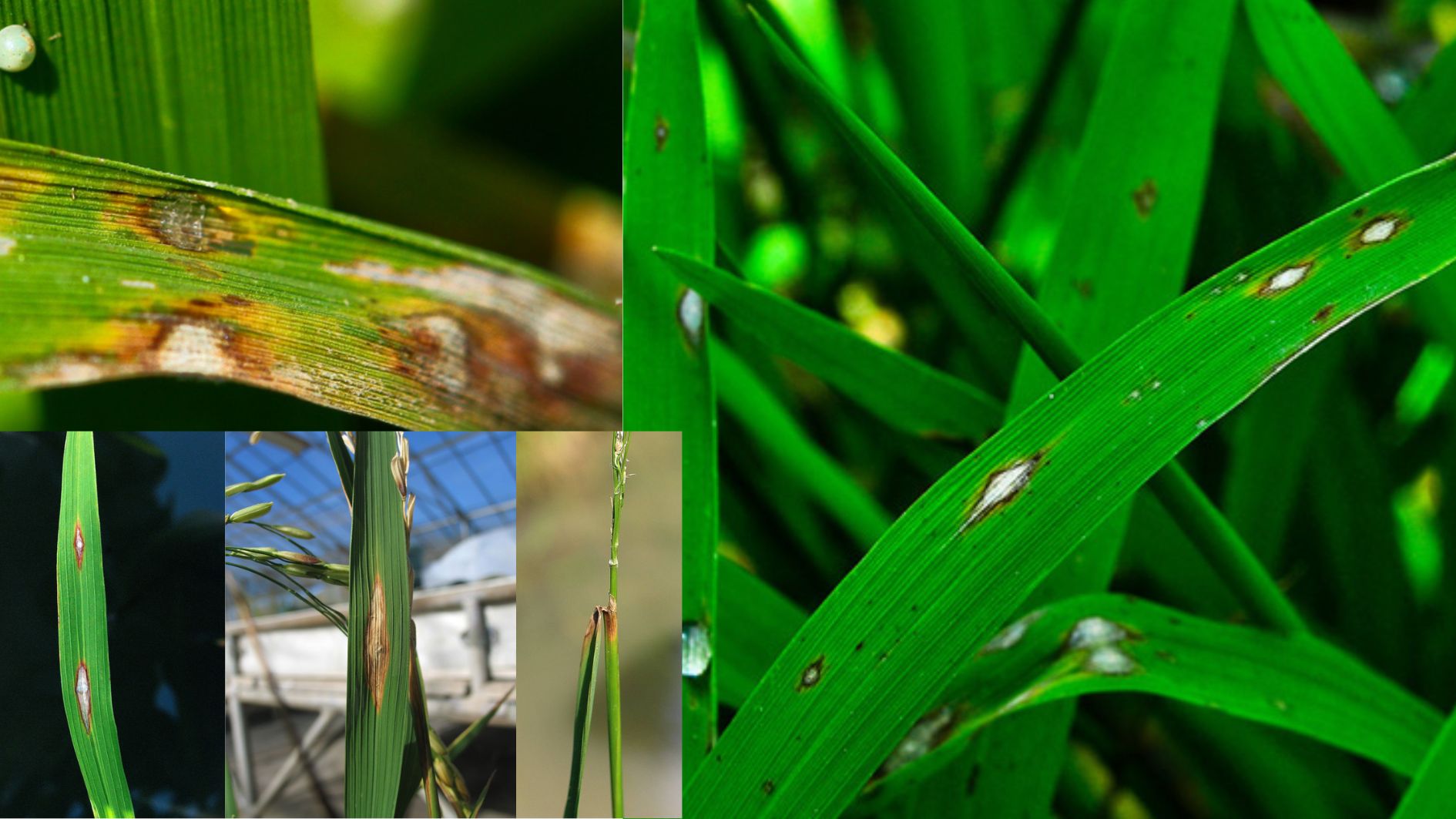

Rice is a vital crop in Nepal, occupying more than 1.36 million hectares of cultivated land. As a major source of livelihood and food security for the Nepalese population, rice production is critical to the country’s economy. However, rice faces multiple biotic and abiotic stresses, with rice blast disease (Magnaporthe oryzae, formerly known as Magnaporthe grisea) being one of the most destructive. The disease is responsible for severe yield losses in both lowland and upland rice cultivation systems, especially under humid and warm conditions typical of Nepal’s monsoon climate.
This detailed blog post provides a comprehensive understanding of the rice blast disease cycle, its history in Nepal, its impact on the country’s rice production, and effective management practices based on the latest research.
Introduction: Rice Production in Nepal
Rice is the staple food crop in Nepal, with an estimated 70% of the population dependent on it for food and livelihood. The primary rice-growing areas are the Terai (southern plains), mid-hills, and even some parts of the mountainous regions. The climate and soil conditions in these areas are well-suited for rice cultivation. However, these regions are also prone to various rice diseases, including rice blast.
Rice blast is one of the most significant fungal diseases in rice cultivation globally, particularly in South and Southeast Asia, where rice farming is extensive. Rice blast can reduce yields by 10% to 50%, depending on the severity of the infection and environmental conditions. The disease affects various parts of the rice plant, including leaves, nodes, panicles, and collars, leading to significant damage.
Magnaporthe oryzae is a significant fungal pathogen known primarily for causing rice blast disease, one of the most destructive diseases affecting rice crops worldwide. This ascomycete fungus has a complex life cycle, allowing it to adapt to various environmental conditions and host defenses. Its ability to produce specialized structures, such as appressoria, enables it to penetrate plant tissues effectively.
The mycelium of M. oryzae is septate and the nuclei within the mycelium and spores of this fungus are haploid. The sexual stage is not found in nature. The asexual stage of the fungus is Pyricularia oryzae, the commonly found form produces three-celled conidia on the apex of conidiophores that extend beyond the surface of lesions and in the culture media.
Understanding the genetics and biology of Magnaporthe oryzae is crucial for developing resistant rice varieties and implementing effective disease management strategies.
| Kingdom | Fungi |
| Phylum | Ascomycota |
| Class | Sordariomycetes |
| Order | Magnaporthales |
| Family | Magnaporthaceae |
| Genus | Magnaporthe |
| Species | Magnaporthe oryzae (former Magnaporthe grisea) |
The morphology of Magnaporthe oryzae includes septate hyphae, simple unbranched conidiophores, and pyriform (pear-shaped) 2- to 3-celled conidia, which are light grayish and serve as the primary infectious agents. It forms melanized appressoria that generate high turgor pressure to penetrate host plant surfaces. The fungus can also produce perithecia (sexual fruiting bodies) under specific conditions and chlamydospores (resting spores) for survival in unfavorable environments.
Initially, the life cycle begins with the production of conidia, which are asexual spores formed on specialized structures called conidiophores. These conidia are dispersed by wind or water and can germinate upon landing on a suitable host surface, such as rice leaves. Germination leads to the formation of a germ tube, which subsequently develops into an appressorium, a specialized infection structure that enables the fungus to penetrate plant tissues12. The appressorium generates high turgor pressure, allowing it to breach the plant cuticle and cell wall, thereby facilitating the entry of the pathogen into the host3. Once inside the host, *M. oryzae* transitions to a biotrophic phase, where it establishes a relationship with the host cells. During this phase, the fungus forms invasive hyphae that spread within the plant tissues, drawing nutrients from the host while avoiding triggering significant host defenses 45. The ability of *M. oryzae* to manipulate host cellular processes is partly due to its secretion of effector proteins, which modulate host immune responses and promote fungal survival6. The interaction between reactive oxygen species (ROS) and the fungus plays a crucial role in this phase, as ROS can influence both pathogen and host signaling pathways7. As the infection progresses, *M. oryzae* can switch to a necrotrophic phase, where it begins to kill host cells to access nutrients more freely. This phase is marked by the production of additional virulence factors and the potential for extensive tissue damage, leading to the characteristic symptoms of rice blast disease, such as lesions on leaves89. The lifecycle can culminate in the formation of sexual structures, known as perithecia, under certain environmental conditions, allowing for genetic recombination and the production of ascospores, which can disperse and initiate new infections 1011.
History of Rice Blast in Nepal
The first major outbreaks of rice blast disease in Nepal were documented in the (1964 AD from Thimi, Bhaktapur) mid-20th century. The pathogen became more widespread in the 1970s and 1980s with the introduction of high-yielding rice varieties that were often more susceptible to blast infection than traditional varieties. This was compounded by shifts in agricultural practices, including changes in irrigation, fertilization, and crop management.
Historical records suggest that rice blast became especially problematic during periods of heavy monsoon rains and high humidity, which created ideal conditions for the pathogen. The rice-growing regions of the Terai, as well as some mid-hill districts, experienced repeated outbreaks during the 1980s and 1990s, leading to substantial yield losses. This forced many farmers to rely on chemical fungicides and resistant rice varieties, though these measures were not always effective.
Efforts to combat rice blast in Nepal included the development of blast-resistant varieties by the National Rice Research Program (NRRP). Several rice varieties with varying levels of resistance were released, including Hardinath-1, Sukhha Dhan-3, and Chaite-2. These varieties have since become popular in regions where blast outbreaks are common, although the evolving nature of the fungus poses ongoing challenges for resistance durability.
The Rice Blast Disease Cycle
Rice blast disease is caused by the fungus Magnaporthe oryzae, which infects all stages of the rice plant’s growth cycle. The pathogen can infect leaves, stems, and panicles, and its ability to spread rapidly under favorable environmental conditions makes it highly destructive.
The disease cycle of rice blast can be divided into several key stages:
1. Spore Production and Dispersal
The rice blast pathogen reproduces through the formation of conidia (asexual spores). These spores are produced on infected plant tissues, such as leaves and stems, and can be dispersed by wind, rain, or mechanical activity (such as farm machinery). In regions with a high density of rice cultivation, the fungus can easily move from one plant to another, leading to rapid spread across fields.
Infected crop residues left in the field after harvest can also harbor the fungus, allowing it to overwinter and persist in the soil. As temperatures rise and humidity increases during the growing season, the conidia are released into the environment, initiating new cycles of infection.
2. Spore Germination and Penetration
Upon landing on the surface of a susceptible rice plant, the conidia require a moist environment to germinate. Favorable conditions for spore germination include temperatures between 24°C and 28°C, along with high humidity (above 90%) or the presence of water droplets on the plant surface.
Once the conidia germinate, they produce germ tubes that grow and differentiate into specialized infection structures called appressoria. The appressorium generates immense turgor pressure, which allows the fungus to penetrate the plant’s cuticle and invade the underlying epidermal cells. The fungus then colonizes the plant tissue, feeding on its nutrients.
3. Host Colonization and Symptom Development
After penetration, M. oryzae transitions into a biotrophic phase, during which it feeds on living host cells. During this stage, the fungus forms haustoria, which are specialized structures that facilitate nutrient uptake from the host plant.
As the infection progresses, visible symptoms begin to appear on the plant. These symptoms vary depending on which part of the plant is infected:
- Leaf Blast: The most common symptom is the development of spindle-shaped lesions on the leaves. These lesions have gray or white centers with dark brown margins and can coalesce to cover large portions of the leaf surface.
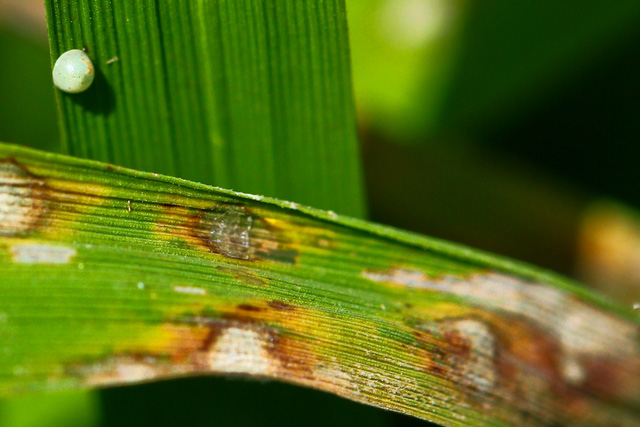
- Collar Blast: This occurs at the junction between the leaf blade and sheath, leading to the death of the leaf blade.
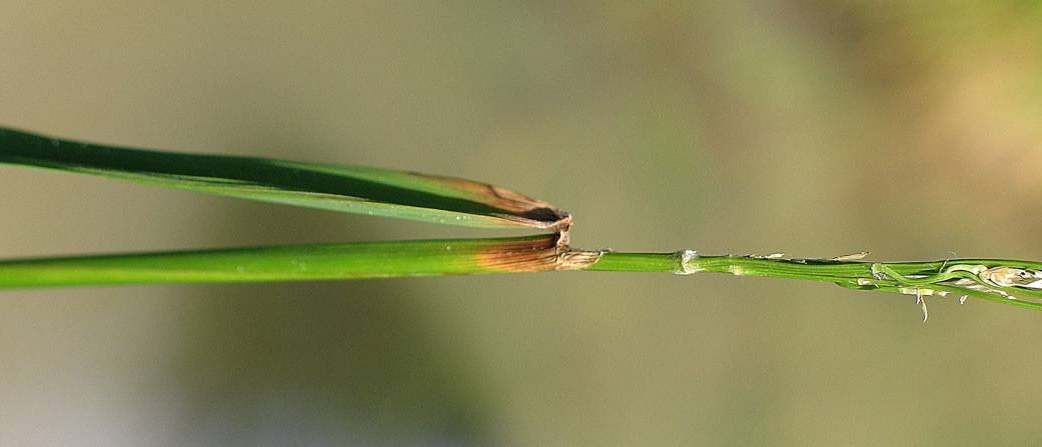
- Neck Blast: The fungus attacks the neck of the rice panicle, resulting in severe yield losses as the grains fail to develop properly.
- Node Blast: Infected nodes turn dark brown or black, leading to the collapse of the plant due to stem breakage.
The biotrophic phase eventually transitions into a necrotrophic phase, during which the fungus kills host cells and feeds on dead plant tissue. This shift results in further spread of the disease and additional symptom development.
4. Sporulation and Secondary Infections
Once the fungus has colonized the plant, it produces conidia on the surface of infected tissues. These spores are dispersed by wind and rain to neighboring plants, initiating secondary infections. Multiple infection cycles can occur within a single growing season if environmental conditions remain favorable.
The pathogen’s ability to complete its life cycle in a matter of days allows it to spread quickly through fields, especially in areas where rice is planted densely and environmental conditions are conducive to disease development.
Environmental Conditions Favoring Rice Blast Disease
Rice blast thrives in specific environmental conditions, and understanding these conditions is critical for managing the disease effectively. The following factors contribute to the severity and spread of rice blast:
- Temperature: Moderate temperatures between 24°C and 28°C are ideal for the growth and reproduction of M. oryzae. Extremely high or low temperatures can limit the pathogen’s ability to infect rice plants.
- Humidity and Leaf Wetness: High humidity (above 90%) and prolonged periods of leaf wetness due to rain or dew are crucial for spore germination and infection. In regions like the Terai and mid-hills of Nepal, the monsoon season creates ideal conditions for rice blast epidemics.
- Rain and Wind: Wind helps disperse conidia over long distances, while rain splash spreads the spores to nearby plants. Continuous rain, especially during flowering stages, enhances the disease spread.
- Rice Variety: Different rice varieties have varying levels of susceptibility to rice blast. Varieties with dense canopies that retain moisture longer are more prone to infection, as the microclimate within the canopy becomes favorable for fungal growth.
Economic Impact of Rice Blast in Nepal
The economic impact of rice blast disease on Nepal’s agricultural sector cannot be understated. The disease affects yield directly by damaging the plant and indirectly by increasing farmers’ reliance on expensive control measures, such as fungicides. In Nepal, yield losses due to rice blast have been reported to range from 10% to 50%, depending on the severity of the outbreak and the region.
In particularly severe cases, farmers have reported total crop failure, forcing them to bear the costs of replanting or turning to other less-profitable crops. Rice blast is particularly problematic in subsistence farming systems, where farmers have limited resources to invest in disease management strategies. Moreover, the reliance on high-yielding varieties that are often more susceptible to blast has further exacerbated the issue.
The economic burden of rice blast extends beyond yield losses. The increased cost of inputs, such as fungicides, and the labor required for their application put additional strain on farmers, many of whom operate on slim profit margins. Moreover, the reduced quality of infected rice grains can lead to lower market prices, further compounding the financial losses for farmers.
Management of Rice Blast: Effective Control Measures in Nepal
Given the economic importance of rice and the severity of rice blast, effective management strategies are crucial to sustaining rice production in Nepal. An integrated approach that combines cultural, biological, and chemical methods offers the most effective control. The following strategies are commonly employed:
1. Use of Resistant Varieties
One of the most sustainable approaches to managing rice blast is the use of resistant rice varieties. Breeding programs in Nepal, led by the National Rice Research Program (NRRP), have developed several blast-resistant varieties, including Hardinath-1, Sukhha Dhan-3, Radha-4, and Chaite-2. These varieties have been widely adopted in regions prone to rice blast and have proven effective in reducing disease incidence.
However, the fungus M. oryzae is known for its genetic diversity and ability to evolve rapidly, meaning that resistance in rice varieties can break down over time. This necessitates ongoing research to develop new resistant varieties and maintain an adequate defense against the disease.
2. Crop Rotation and Field Sanitation
Field sanitation is essential for minimizing the carryover of the pathogen from one growing season to the next. Infected plant residues can harbor the fungus, allowing it to persist in the soil and infect subsequent rice crops. Farmers are encouraged to remove or bury rice stubble after harvest to reduce the inoculum present in the field.
Crop rotation, particularly with non-host plants, can also help break the disease cycle. Growing legumes, vegetables, or other cereals in rotation with rice can reduce the build-up of the pathogen in the soil, limiting its ability to infect the next rice crop.
3. Water Management
Proper water management plays a key role in controlling rice blast. Flooded fields can reduce the chances of infection by limiting the availability of oxygen, which the fungus requires for spore germination and growth. However, in rainfed systems or during periods of drought, the risk of infection increases, as the leaves remain dry and more exposed to the fungus.
Maintaining optimal water levels in rice paddies, especially during the critical growth stages, can help reduce the likelihood of blast outbreaks.
4. Balanced Fertilization
Excessive nitrogen fertilization can promote lush vegetative growth, which creates a favorable microclimate for rice blast development. Nitrogen-rich plants have a dense canopy that retains moisture, providing ideal conditions for fungal growth and spore germination.
Balanced fertilization with appropriate levels of nitrogen, phosphorus, and potassium is crucial for minimizing the risk of rice blast. The use of organic fertilizers, such as farmyard manure, can also enhance the overall health of the rice plant, making it more resistant to infection.
5. Fungicide Application
Chemical control through the use of fungicides can be effective in managing rice blast, particularly in areas where resistant varieties are not available or in cases of severe outbreaks. Commonly used fungicides include triazoles, strobilurins, and carbamates, which target different stages of the pathogen’s life cycle.
Fungicides are typically applied as a preventative measure, particularly during the early stages of plant growth when the risk of infection is highest. However, reliance on chemical control should be minimized to avoid the development of fungicide-resistant strains of M. oryzae and to reduce environmental contamination.
6. Biological Control
Research into biological control methods for rice blast is ongoing, with promising results from the use of biocontrol agents such as Trichoderma spp. and Bacillus subtilis. These beneficial microorganisms can inhibit the growth of M. oryzae through various mechanisms, including competition for nutrients, production of antifungal compounds, and induction of plant defense responses.
Biological control offers a sustainable and environmentally friendly alternative to chemical fungicides, although its effectiveness can vary depending on environmental conditions and the presence of other pathogens.
Conclusion: Future Prospects and Challenges in Rice Blast Management
Rice blast continues to pose a significant challenge to rice farmers in Nepal, particularly in regions with favorable climatic conditions for the disease. While progress has been made in developing resistant varieties and promoting integrated pest management (IPM) strategies, the dynamic nature of the pathogen and the challenges posed by climate change make it difficult to achieve long-term control.
The future of rice blast management in Nepal will depend on continued research and development, particularly in the areas of resistance breeding, biological control, and the identification of new fungicides with minimal environmental impact. Collaboration between farmers, researchers, and policymakers will be essential to ensure that rice production remains sustainable and that the country can meet its food security goals in the face of evolving challenges.
As climate change is expected to alter temperature and rainfall patterns in Nepal, it is likely that rice blast epidemics will become more frequent and severe. This underscores the need for adaptive management strategies that can respond to changing environmental conditions and the evolving nature of the pathogen.
By combining traditional knowledge with modern agricultural practices, Nepalese farmers can continue to produce high-quality rice while minimizing the impact of rice blast and other diseases on their crops.
This detailed post explores the biology, life cycle, history, and management strategies for rice blast in Nepal, providing both scientific depth and practical recommendations for controlling this devastating disease.
References
- Liang, H., Yi, W., Zhang, P., Dang, Y., Liu, G., & Zhang, S. (2021). Alternative splicing of mopten is important for growth and pathogenesis in magnaporthe oryzae. Frontiers in Microbiology, 12. https://doi.org/10.3389/fmicb.2021.715773 ↩︎
- Fernandez, J. and Orth, K. (2018). Rise of a cereal killer: the biology of magnaporthe oryzae biotrophic growth. Trends in Microbiology, 26(7), 582-597. https://doi.org/10.1016/j.tim.2017.12.007 ↩︎
- Xia, Y., Tang, B., Ryder, L. S., MacLean, D., Were, V. M., Eseola, A. B., … & Talbot, N. J. (2023). The transcriptional landscape of plant infection by the rice blast fungus magnaporthe oryzae reveals distinct families of temporally co-regulated and structurally conserved effectors. The Plant Cell, 35(5), 1360-1385. https://doi.org/10.1093/plcell/koad036 ↩︎
- Fernandez, J. and Orth, K. (2018). Rise of a cereal killer: the biology of magnaporthe oryzae biotrophic growth. Trends in Microbiology, 26(7), 582-597. https://doi.org/10.1016/j.tim.2017.12.007 ↩︎
- Fernandez, J. (2023). The phantom menace: latest findings on effector biology in the rice blast fungus. aBIOTECH, 4(2), 140-154. https://doi.org/10.1007/s42994-023-00099-4 ↩︎
- Xia, Y., Tang, B., Ryder, L. S., MacLean, D., Were, V. M., Eseola, A. B., … & Talbot, N. J. (2023). The transcriptional landscape of plant infection by the rice blast fungus magnaporthe oryzae reveals distinct families of temporally co-regulated and structurally conserved effectors. The Plant Cell, 35(5), 1360-1385. https://doi.org/10.1093/plcell/koad036 ↩︎
- Fernandez, J. (2023). The phantom menace: latest findings on effector biology in the rice blast fungus. aBIOTECH, 4(2), 140-154. https://doi.org/10.1007/s42994-023-00099-4 ↩︎
- Fernandez, J. and Orth, K. (2018). Rise of a cereal killer: the biology of magnaporthe oryzae biotrophic growth. Trends in Microbiology, 26(7), 582-597. https://doi.org/10.1016/j.tim.2017.12.007 ↩︎
- Marroquin-Guzman, M. and Wilson, R. A. (2015). Gata-dependent glutaminolysis drives appressorium formation in magnaporthe oryzae by suppressing tor inhibition of camp/pka signaling. PLOS Pathogens, 11(4), e1004851. https://doi.org/10.1371/journal.ppat.1004851 ↩︎
- Fernandez, J. (2023). The phantom menace: latest findings on effector biology in the rice blast fungus. aBIOTECH, 4(2), 140-154. https://doi.org/10.1007/s42994-023-00099-4 ↩︎
- Ding, S., Liu, W., Iliuk, A., Ribot, C., Vallet, J., Tao, A., … & Xu, J. (2010). The tig1 histone deacetylase complex regulates infectious growth in the rice blast fungus magnaporthe oryzae . The Plant Cell, 22(7), 2495-2508. https://doi.org/10.1105/tpc.110.074302 ↩︎