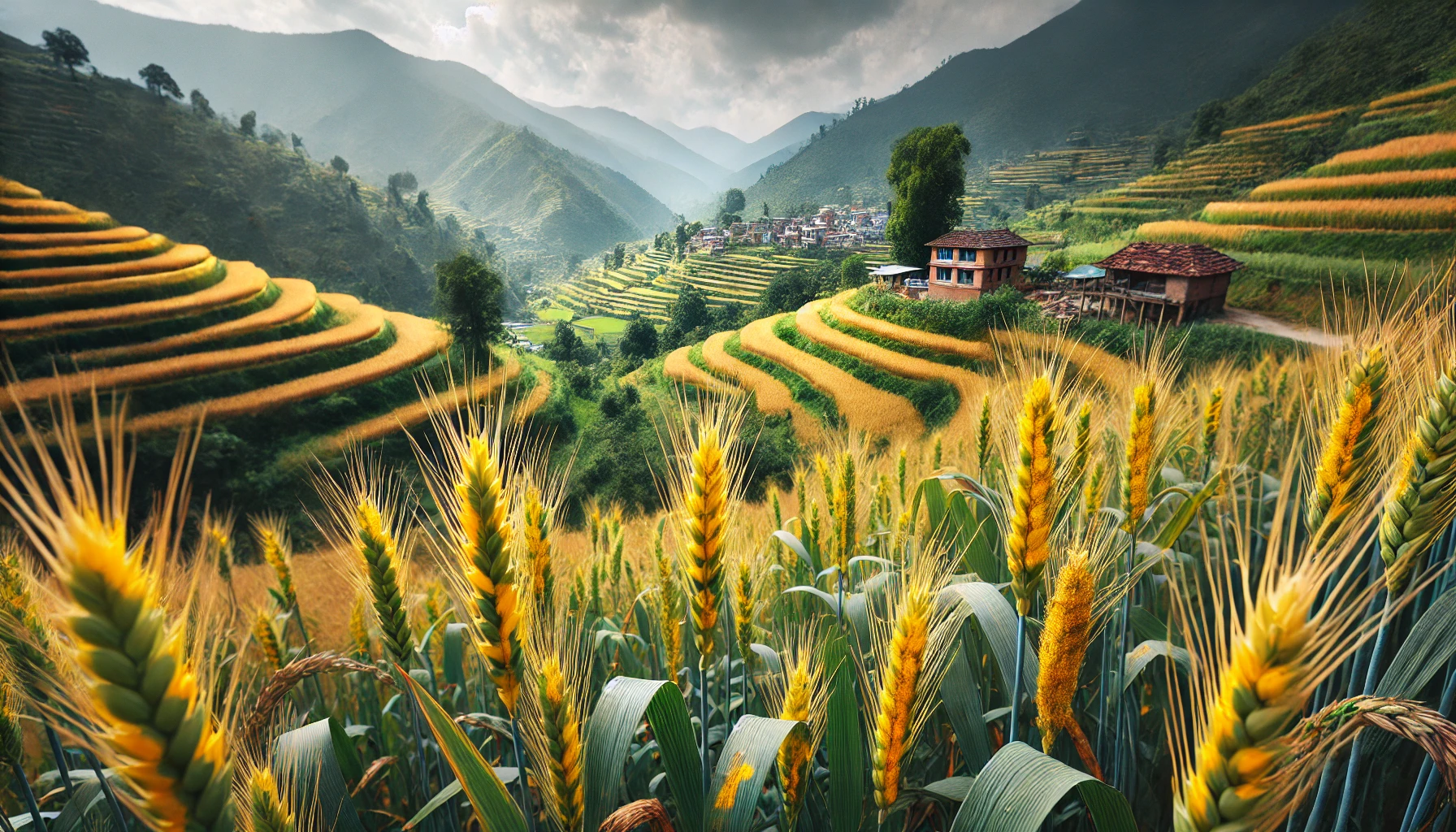

Yellow rust of wheat, also known as stripe rust, is one of the most severe diseases affecting wheat globally, including in Nepal. It is caused by the fungal pathogen Puccinia striiformis f.sp. tritici and poses a significant threat to wheat production, leading to severe yield losses if not effectively managed. In Nepal, wheat is the third most important cereal crop after rice and maize, covering around 750,000 hectares of cultivated land, especially in the Terai and mid-hill regions. The prevalence of yellow rust, exacerbated by conducive environmental conditions and the susceptibility of wheat cultivars, threatens national food security and livelihoods.
This detailed blog post will explore the biology of the yellow rust of wheat pathogen, the disease cycle, factors influencing its epidemic in Nepal, and the most effective management strategies, all framed in the context of modern scientific understanding.
Taxonomical Classification of Yellow Rust of Wheat
The pathogen responsible for yellow rust of wheat is Puccinia striiformis f.sp. tritici, a biotrophic fungus belonging to the phylum Basidiomycota and the order Pucciniales. The family Pucciniaceae contains many rust fungi that are economically important. Puccinia striiformis is an obligate parasite, meaning it requires a living host to complete its life cycle.
The disease is termed “stripe rust” because the lesions appear as yellow to orange stripes along the leaf veins, although other parts of the plant may also be affected. The fungus produces urediniospores that are dispersed by wind over long distances. Understanding the pathogen’s life cycle and its interaction with the host plant is critical for disease management.
| Taxonomic Rank | Classification |
|---|---|
| Kingdom | Fungi |
| Phylum | Basidiomycota |
| Subphylum | Pucciniomycotina |
| Class | Pucciniomycetes |
| Order | Pucciniales |
| Family | Pucciniaceae |
| Genus | Puccinia |
| Species | Puccinia striiformis |
| Forma Specialis | Puccinia striiformis f.sp. tritici |
Climatic Conditions Favoring Yellow Rust of Wheat
- Cool Temperatures (10°C – 15°C):
- Ideal for yellow rust of wheat development, especially during the winter season in the Terai and mid-hill regions.
- High Relative Humidity (>90%):
- Promotes spore germination and infection, commonly observed in areas with frequent dew and moisture.
- Extended Periods of Leaf Wetness (8-12 hours of dew or rain):
- Dew formation in the morning and overnight moisture create conducive conditions for spore germination and fungal infection.
- Moderate to Light Rainfall:
- Helps maintain leaf wetness, facilitating infection, especially in regions where rainfall is frequent during the wheat-growing season.
- Cloudy or Overcast Conditions:
- Keeps temperatures cool and prolongs leaf wetness, allowing the pathogen to thrive.
- Cool Nights (4°C – 10°C):
- Cooler nighttime temperatures in the wheat-growing season (November to March) extend the dew period, enhancing the infection process.
- Light to Moderate Winds:
- Aid in the long-distance dispersal of yellow rust spores, especially from neighboring regions into Nepal.
- Mid to High Elevation (700 – 2000 meters):
- Wheat-growing areas in Nepal’s mid-hills and Terai experience cool, moist conditions, making them prone to yellow rust outbreaks.
- Absence of Hard Frost/Freeze:
- Yellow rust thrives in areas where frost is light or absent. Hard frost events that kill the spores or slow down the disease progression are rare in lower elevations.
These conditions are prevalent in Nepal’s wheat-growing areas, making yellow rust of wheat a significant challenge for wheat farmers.
Symptoms of Yellow Rust of Wheat
Yellow rust of wheat produces distinctive symptoms in wheat plants. Below is a detailed list of the symptoms of yellow rust of wheat:
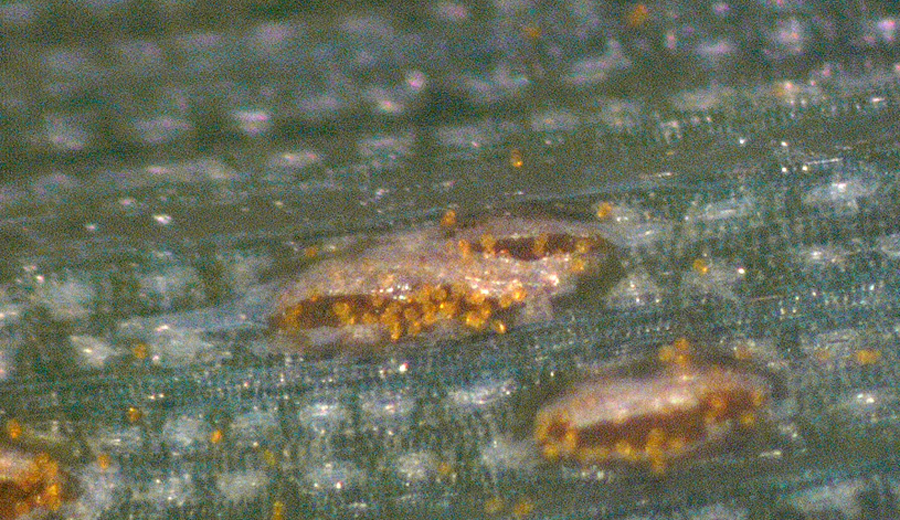
1. Yellow to Orange Pustules (Uredinia)
- Appearance: Small, round or elongated yellow-orange pustules (uredinia) develop primarily on the leaf surface.
- Color: The pustules are bright yellow to orange in color, giving the disease its characteristic name.
- Location: Typically arranged in long, narrow stripes parallel to the leaf veins. These can also appear on leaf sheaths, glumes, and occasionally stems.
Source: University of Georgia (Extension)
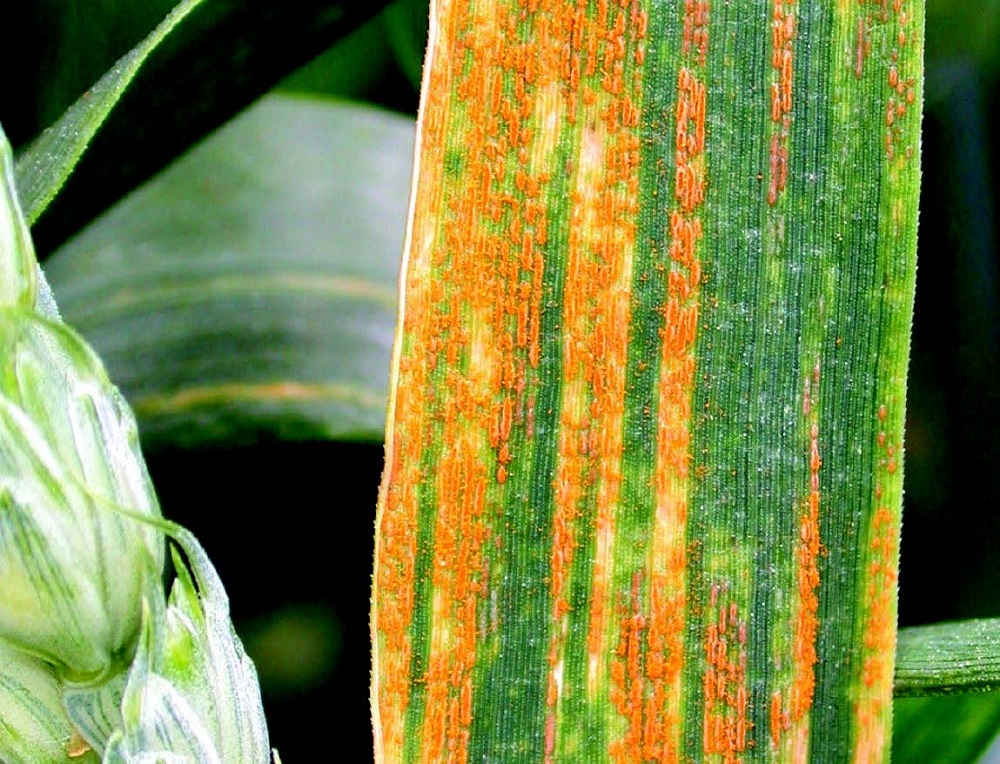
2. Stripe Formation
- The pustules form distinct stripes along the leaf veins, often several centimeters long. These stripes are the most recognizable symptom of yellow rust, distinguishing it from other rusts like leaf rust (where pustules are scattered).
Source: AHDB UK
3. Early Leaf Chlorosis
- In the early stages of infection, affected leaves may show yellowish or light-green discoloration (chlorosis) around the developing pustules.
4. Leaf Necrosis
- As the disease progresses, the pustules may cause leaf tissue to die, leading to brown, necrotic (dead) areas along the infected stripes.
5. Premature Leaf Senescence
- Severe infections cause the leaves to wither and die prematurely, significantly reducing the plant’s ability to photosynthesize and produce grain.
6. Infected Leaf Sheaths and Stems
- In more advanced stages, pustules can appear on the leaf sheaths and occasionally on the stems. This contributes further to plant stress and reduced vigor.
7. Stunted Plant Growth
- Severe infections can cause stunted growth in wheat plants, as the disease impacts the plant’s overall health and nutrient absorption.
8. Grain Shriveling and Reduced Yield
- Due to reduced photosynthesis, the grain produced by infected plants is often smaller, shriveled, and of lower quality, leading to significant yield losses.
9. Presence of Teliospores (in some cases)
- Later in the season, black teliospores may develop in some regions, though this is rare in Nepal. These spores appear in the pustules as the fungus transitions into a dormant survival stage.
Disease Cycle of Yellow Rust of Wheat
Unlike other cereal rust fungi, which typically exhibit macrocyclic (producing multiple spore types) and heteroecious (requiring two different hosts to complete its full sexual cycle) life cycles with five spore stages and two unrelated hosts, Puccinia striiformis f.sp. tritici was long believed to have a simpler, microcyclic life cycle. However, this changed in 2009 when research led by Yue Jin at the USDA-ARS Cereal Disease Lab confirmed that barberry (Berberis and Mahonia species) serves as an alternate host for this pathogen.
The disease cycle of yellow rust of wheat (also known as stripe rust) is complex and involves multiple stages, including both asexual and sexual reproduction. However, in many regions of the world, including Nepal, the disease cycle is mainly driven by the asexual stage, as the alternate hosts (Berberis and Mahonia species) are not commonly present, and the sexual cycle is rarely completed.
.PNG)
Source:
Below is a detailed, scientific explanation of the disease cycle of yellow rust of wheat with an emphasis on the spore formation processes during both sexual and asexual stages.
1. Overwintering Stage
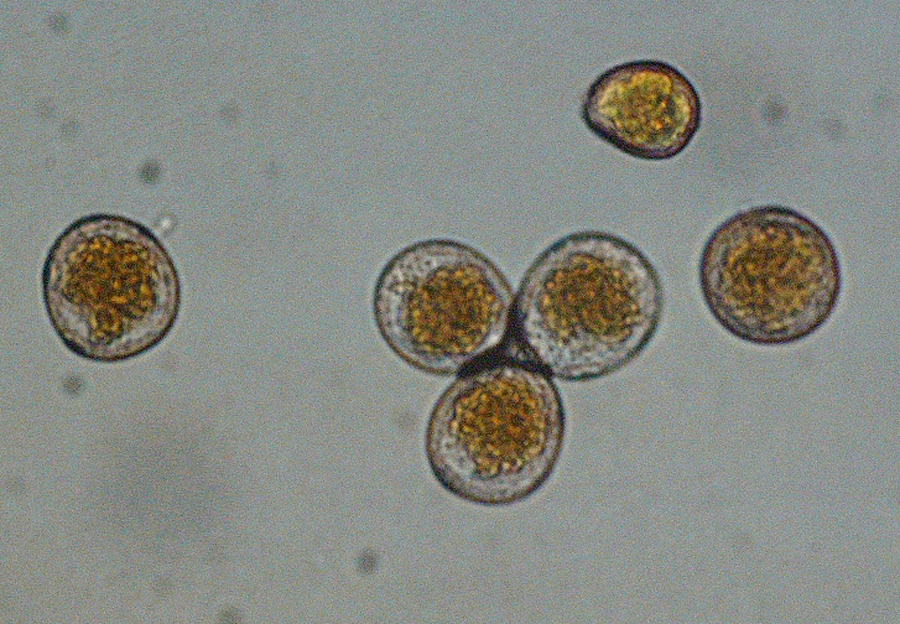
The pathogen overwinters primarily in the form of urediniospores (asexual spores) or as dormant mycelium within living wheat plants, volunteer wheat, or related grass species. This stage is crucial for the initial inoculum in the next growing season.
- Spore Type: Urediniospores (asexual)
- These spores are capable of surviving mild winters by remaining viable on green plants, particularly in temperate regions such as the Terai and mid-hill regions of Nepal.
Source: University of Georgia (Extension)
2. Primary Infection (Asexual Stage)
The primary infection occurs when urediniospores, carried by wind, land on a susceptible wheat plant during the cool and moist wheat-growing season.
a. Spore Germination and Penetration
- Temperature and Humidity: Optimal conditions for spore germination are 10°C to 15°C with high relative humidity (>90%).
- Germination Process: Urediniospores require moisture (dew, rain, or irrigation) to germinate, forming a germ tube.
- Stomatal Entry: The germ tube penetrates the wheat leaf through the stomata, bypassing the plant’s natural defenses.
- Intercellular Mycelium Formation: Once inside the leaf, the fungus develops intercellular mycelium, which extracts nutrients from the plant’s cells without killing them (biotrophic relationship).
b. Asexual Reproduction: Urediniospores Formation
- Urediniospore Production: After approximately 7-10 days of infection, the fungus begins producing urediniospores within uredinia (orange-yellow pustules).
- Uredinia erupt through the leaf epidermis, creating yellow to orange stripes that give the disease its characteristic appearance.
- Dispersal: Urediniospores are windborne and can be carried long distances, allowing the disease to spread rapidly under favorable conditions.
c. Secondary Infection
- The produced urediniospores are released and dispersed by wind to infect new wheat plants.
- Multiple Cycles: Urediniospores can complete several cycles of infection within one growing season (known as polycyclic reproduction), driving the epidemic spread of the disease.
- This is the primary driver of the disease cycle in Nepal, where favorable cool and moist conditions lead to multiple cycles of infection.
3. Late-Season Development: Transition to Sexual Stage
While the asexual urediniospore stage is the primary mode of reproduction in many regions, the fungus has the potential to undergo sexual reproduction, particularly late in the growing season, producing teliospores and other sexual structures.
a. Teliospores Formation (Beginning of Sexual Stage)
- Environmental Cue: As the wheat plant approaches maturity, or under unfavorable conditions, the pathogen may switch from producing asexual urediniospores to teliospores (sexual spores).
- Teliospores:
- Structure: Teliospores are thick-walled, dark-colored spores that serve as a survival structure. They are more resistant to adverse environmental conditions than urediniospores.
- Function: Teliospores do not infect wheat directly. Their primary role is to survive through the offseason and facilitate the completion of the sexual cycle.
b. Germination of Teliospores and Meiosis
- Teliospores Overwintering: Teliospores remain dormant until favorable conditions return, typically in the next growing season or in regions with the presence of alternate hosts (Berberis and Mahonia).
- Germination and Basidiospores Formation:
- Teliospores undergo meiosis, producing basidiospores, which are tiny haploid spores.
- Basidiospores are formed in the spring after the teliospores germinate, but they do not infect wheat directly.
c. Alternate Hosts and Aeciospore Formation
- Alternate Hosts: The alternate hosts for Puccinia striiformis are species of Berberis and Mahonia. These plants, however, are not common in most wheat-growing regions, including Nepal, which limits the occurrence of the sexual stage.
- Infection of Alternate Hosts:
- Basidiospores infect the alternate hosts, causing the formation of pycnia (spermogonia) on the leaves.
- The pycniospores (produced in pycnia) participate in plasmogamy (fusion of two different mating types), leading to the production of aecia.
- Aeciospores:
- From the aecia, aeciospores are produced and released. These aeciospores are capable of reinfecting wheat, completing the sexual stage.
- However, in regions like Nepal, where the alternate hosts are rare, the sexual stage is not commonly observed, and the disease cycle relies primarily on asexual reproduction through urediniospores.
4. Dormancy and Survival Between Seasons
- Overwintering Structures: The pathogen survives the offseason through:
- Urediniospores on volunteer wheat plants or related grasses.
- Teliospores in regions with colder winters or where alternate hosts are present.
- In Nepal, the pathogen generally overwinters as urediniospores in cool, high-altitude regions or on volunteer plants, ensuring the pathogen’s survival for the next wheat-growing season.
Key Spore Types in the Disease Cycle
- Urediniospores (Asexual Stage):
- Primary spores for wheat infection during the growing season.
- Responsible for repeated cycles of infection and rapid disease spread.
- Produced in uredinia on wheat leaves.
- Teliospores (Sexual Stage):
- Thick-walled spores that form late in the season.
- Enable overwintering and initiate the sexual cycle.
- Do not infect wheat directly but produce basidiospores after meiosis.
- Basidiospores (Sexual Stage):
- Produced from teliospores via meiosis.
- Infect the alternate hosts (Berberis and Mahonia), but do not infect wheat directly.
- Aeciospores (Sexual Stage):
- Produced on the alternate hosts after aecia formation.
- Reinfect wheat, completing the sexual reproduction stage.
- Rarely observed in regions like Nepal, where alternate hosts are not present.
Summary of the Disease Cycle
- In Nepal, the disease cycle of yellow rust of wheat is predominantly driven by asexual reproduction involving urediniospores. These spores are responsible for primary infections and secondary spread, leading to multiple infection cycles in a single growing season under favorable conditions.
- The sexual stage involving teliospores, basidiospores, and aeciospores plays a minor role due to the scarcity of alternate hosts (Berberis and Mahonia) in most wheat-growing regions of Nepal.
- The pathogen’s ability to survive as urediniospores or dormant mycelium between seasons ensures its persistence and the potential for recurrent yellow rust epidemics each year.
Effective management of yellow rust of wheat requires breaking this disease cycle, particularly by focusing on early detection, use of resistant wheat varieties, fungicide applications, and cultural practices to reduce the overwintering inoculum.
Epidemiology of Yellow Rust in Nepal
1. Environmental Conditions
The cool winter climate in Nepal, particularly in the Terai and mid-hill regions, is highly conducive to yellow rust of wheat development. Optimal temperatures of 10°C to 15°C, combined with extended periods of leaf wetness from dew or rain, provide ideal conditions for the pathogen’s infection and spread. High humidity levels also favor rust proliferation. These factors make Nepal a hotspot for yellow rust during the wheat-growing season.
2. Susceptible Varieties
The susceptibility of wheat cultivars plays a crucial role in the incidence and severity of yellow rust of wheat. Many popular wheat varieties in Nepal have become susceptible due to changes in pathogen virulence, especially the evolution of new races of Puccinia striiformis. Genetic uniformity of cultivars can increase the risk of large-scale epidemics.
3. Virulence Shifts
The yellow rust of wheat pathogen exhibits a high capacity for genetic change. New virulent races arise through mutations or sexual recombination in regions where the alternate host is present. In Nepal, the emergence of new races of Puccinia striiformis has rendered previously resistant wheat varieties susceptible, complicating management efforts.
4. Wind Dispersal
Yellow rust urediniospores are efficiently dispersed by wind over long distances. In Nepal, winds from the northern Himalayan region and neighboring countries can carry spores across large geographical areas, facilitating the rapid spread of the disease.
Management of Yellow Rust in Nepal
Given the favorable environmental conditions, genetic susceptibility of wheat varieties, and the pathogen’s ability to spread rapidly, an integrated approach to yellow rust management is essential.
1. Host Resistance
One of the most effective long-term strategies for managing yellow rust is the development and deployment of resistant wheat varieties. Wheat breeders in Nepal, in collaboration with international research organizations like CIMMYT (International Maize and Wheat Improvement Center), have developed rust-resistant varieties.
2. Gene Pyramiding
Breeding for resistance often involves gene pyramiding, where multiple resistance genes are combined in a single cultivar. This strategy helps to enhance resistance durability by preventing the pathogen from overcoming resistance quickly. Some of the most commonly used genes for yellow rust resistance include Yr5, Yr10, Yr15, and Yr18.
3. Fungicide Application
Fungicides remain an essential tool for managing yellow rust outbreaks, especially in cases where resistant varieties are not available. Triazole fungicides, such as propiconazole, tebuconazole, and azoxystrobin, are commonly used to control yellow rust. However, it is crucial to apply fungicides at the right time—early in the disease cycle, when symptoms first appear—to prevent the rapid spread of the disease.
Fungicide Resistance Management:
Continuous reliance on fungicides can lead to the development of fungicide-resistant pathogen strains. To avoid this, fungicide applications should be rotated with different modes of action. Integrated Pest Management (IPM) programs emphasize minimal fungicide use, focusing more on cultural and genetic methods.
4. Cultural Practices
Adopting specific cultural practices can help reduce the incidence and severity of yellow rust of wheat. These include:
- Crop Rotation: Rotating wheat with non-host crops like rice or legumes can help break the pathogen’s life cycle, reducing the inoculum load.
- Early Sowing: Sowing wheat earlier in the season (before optimal conditions for the pathogen develop) can help the crop escape severe rust pressure.
- Optimized Irrigation: Overhead irrigation can exacerbate yellow rust by prolonging leaf wetness. Drip or furrow irrigation reduces the leaf wetness period, thus lowering the risk of infection.
5. Monitoring and Forecasting
Regular monitoring of wheat fields for early signs of yellow rust of wheat is essential for timely interventions. In Nepal, regional agricultural extension services and research institutions collaborate to provide disease forecasting models and early warnings to farmers. The use of digital tools and satellite-based remote sensing can also enhance surveillance and rapid response to disease outbreaks.
6. Biological Control
Although not widely adopted in Nepal yet, biological control agents such as hyperparasites (organisms that parasitize the rust pathogen) and antagonistic microorganisms like Bacillus spp. and Pseudomonas spp. show promise in reducing yellow rust severity.
The Role of Climate Change
Climate change is expected to alter the dynamics of yellow rust of wheat epidemics in Nepal. Warmer winters and changes in rainfall patterns could shift the geographical distribution of the disease, potentially expanding it to areas previously unaffected. Higher temperatures could also accelerate the pathogen’s life cycle, leading to more frequent and severe outbreaks. Therefore, continued research on the interactions between climate variables and yellow rust epidemiology is crucial for long-term management.
Conclusion
Yellow rust of wheat is a major threat to wheat production in Nepal, exacerbated by conducive environmental conditions, susceptible cultivars, and the pathogen’s ability to evolve rapidly. The disease cycle of Puccinia striiformis f.sp. tritici involves complex interactions between the pathogen, host, and environment, making its management a multifaceted challenge.
An integrated approach that combines the use of resistant varieties, fungicides, cultural practices, and disease monitoring is essential for effective control of yellow rust of wheat in Nepal. As the pathogen continues to evolve and climate change alters disease dynamics, ongoing research and collaboration between farmers, scientists, and agricultural institutions are key to safeguarding Nepal’s wheat production and food security.